Step through the ornate gates on Avenida Las Heras in Palermo and you’ll find something stranger and more hopeful than a typical city park: the shell of one of South America’s grandest Victorian-era zoos, mid-transformation into an eco-park built for people and wildlife alike. For 128 years, the Buenos Aires Zoo entertained generations of porteños behind its Moorish, Chinese, and Greco-Roman pavilions — fantastical little buildings designed to echo the homelands of the animals inside, from elephants and polar bears to big cats and condors. In June 2016, the city shut the gates for good, ending more than a century of caged exhibits, and committed the zoo’s 18 hectares to a very different future: the Buenos Aires Ecopark.
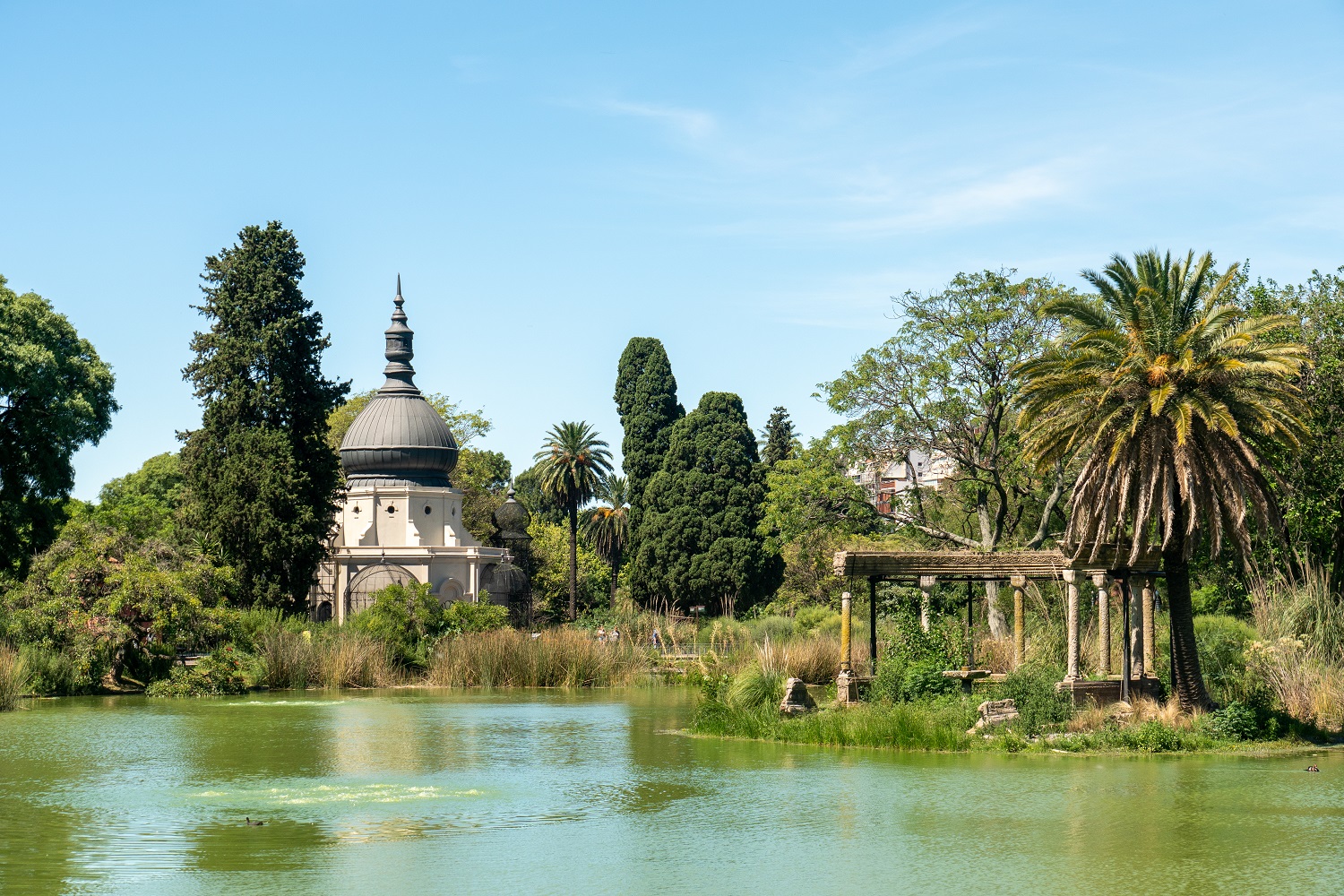
Today the grounds are a hybrid of living history and ongoing rehabilitation. Near the Plaza Italia entrance, ducks, maras (the rabbit-sized native rodents that look like small deer), and peacocks wander freely across open lawns where moats and bars used to stand — come early and you’ll likely get close without trying. Head toward Avenida del Libertador and you’ll find El Estanque, the old ornamental pond area, now replanted with more than 2,000 trees and shrubs and roughly 200 native species, its restored fountains and sculptures — including pieces by Argentine sculptor Lola Mora — quietly reclaiming the space from decades of exhibit infrastructure.
The real draw for most visitors, though, is the architecture itself. Because the zoo’s historic pavilions are protected national monuments, they can’t be torn down, so wandering the paths means passing a strange, beautiful catalogue of 19th-century exoticism: a mock Hindu temple, a Japanese-style aviary, a Moorish elephant house. Treat a visit like an open-air architecture walk with the occasional free-roaming animal thrown in, pair it with the neighboring Botanical Garden and the vast Parque Tres de Febrero next door, and you’ve got an easy half-day loop through one of Palermo’s greenest corners. Entry is capped at 2,000 visitors a day, so an early-morning visit means more room to explore — and remember, feeding the animals isn’t allowed.