
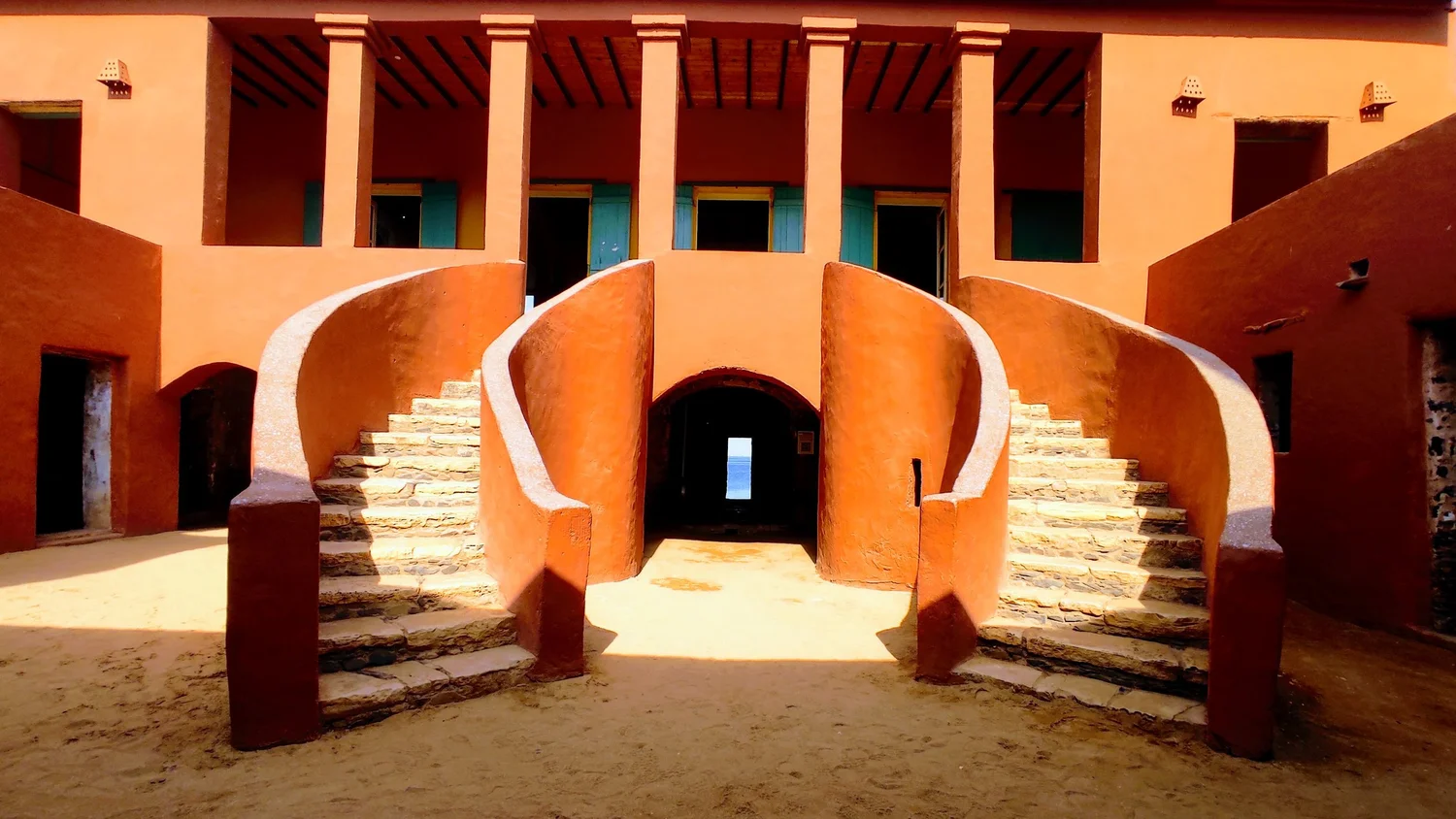
On Gorée Island, just off the coast of Dakar, the House of Slaves—Maison des Esclaves—is a museum and place of remembrance dedicated to the human history of the transatlantic slave trade. The building sits within the UNESCO-listed Island of Gorée, where narrow streets, Atlantic light and layered colonial architecture give way to a visit that asks for attention rather than speed. This is not a stop to rush through between photographs; it is a place to listen, read and make room for the weight of the history being interpreted.
The Maison des Esclaves has served as a museum since 1962 and welcomes visitors into a broader conversation about enslavement, resistance, survival and the lasting consequences of the trade. Its displays and renewed interpretation place the house within the history of Gorée itself, an island shaped by centuries of Portuguese, Dutch, English and French presence along the West African coast. Gorée stands as a place of memory, dialogue and reconciliation, and that wider setting helps put the museum visit in context.
Reach the island by boat from Dakar, then continue on foot through Gorée to Rue Saint Germain. Build in enough time to approach the museum with care and to explore the island beyond it, but resist the temptation to turn the experience into a checklist. The most meaningful visit is one that leaves space for quiet observation, respectful conversation and the historical questions raised by the site. Photography and behavior should be mindful of other visitors who may be there for personal, educational or diasporic reasons.
The House of Slaves is an essential stop for travelers seeking to understand Senegal’s cultural heritage and the Atlantic world with more depth than a standard sightseeing itinerary allows. Pair it with the island’s other heritage sites, then return to Dakar carrying a fuller sense of why Gorée remains a place of international memory. Check the museum directly before traveling for current visitor arrangements and ferry planning.