
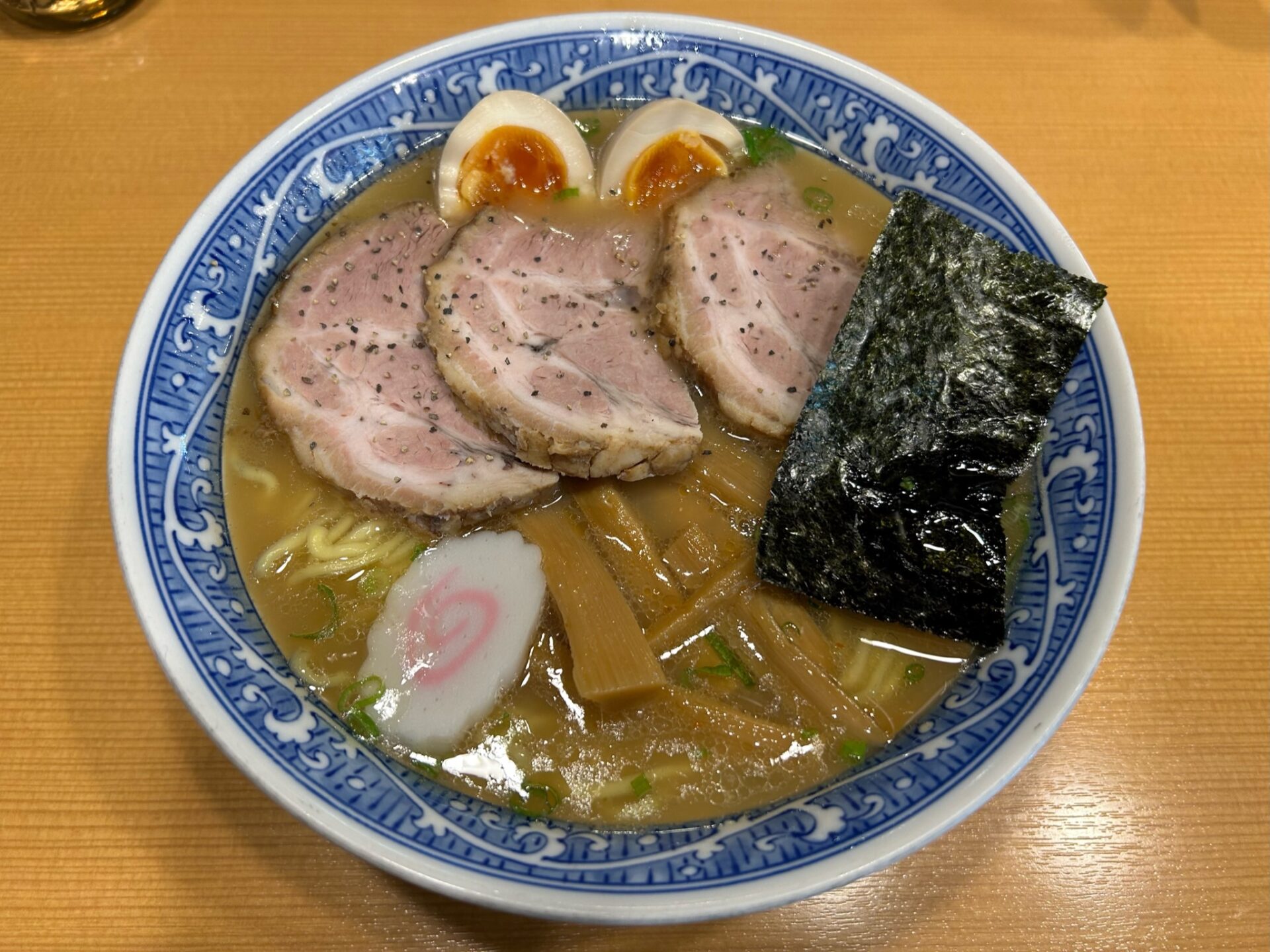
Chuka Soba Aoba (中華そば青葉) opened in Nakano in 1996 and is widely credited, alongside Menya Musashi and Kujira-ken, with sparking the great Tokyo ramen boom of the mid-1990s. Its claim to fame is the “W soup” (double soup) technique: an animal-based stock built from pork bone and chicken, skimmed of excess fat to keep only its richness, blended separately with a seafood stock extracted from bonito, mackerel, and dried sardines. The two stocks are combined just before serving, giving the broth a layered flavor that opens with a bright, smoky seafood aroma and finishes with a deep, savory richness — a technique so influential it spawned an entire generation of “Aoba-inspired” ramen shops across Japan.
The Nakano Honten keeps the original stall-like atmosphere that made the shop famous: a compact, counter-only room with just 13 seats and an open, door-less frontage that recalls the yatai (street-stall) feel of the restaurant’s early days. Ordering is by ticket machine at the entrance. The standard “Chuka Soba” is the dish to try, and the “Tokusei” (special) version loads the bowl with three slices of tender chashu pork, a marinated soft-boiled egg, nori, menma (bamboo shoots), naruto fish cake, and scallion. The noodles are a proprietary blend designed to combine the springy bite of udon with the firmness of Chinese-style ramen noodles — medium-thick and straight, built specifically to hold up against the double soup.
Nakano Honten sits about a 3-5 minute walk from JR Nakano Station’s north side, along the Fureai Road shopping street, and has been featured in the Michelin Guide Tokyo. The chain has since grown to roughly 20 locations across the greater Tokyo area — Iidabashi, Omiya, Hachioji, Fuchu, Funabashi, Ikebukuro Sunshine, Okachimachi, Sayama, Tsukuba, Kinshicho, and more — but ramen fans still make the pilgrimage to Nakano for the original bowl that started it all. The shop is open daily from roughly 10:30am until around 9pm or whenever the day’s noodles sell out, with no regular closing day.