
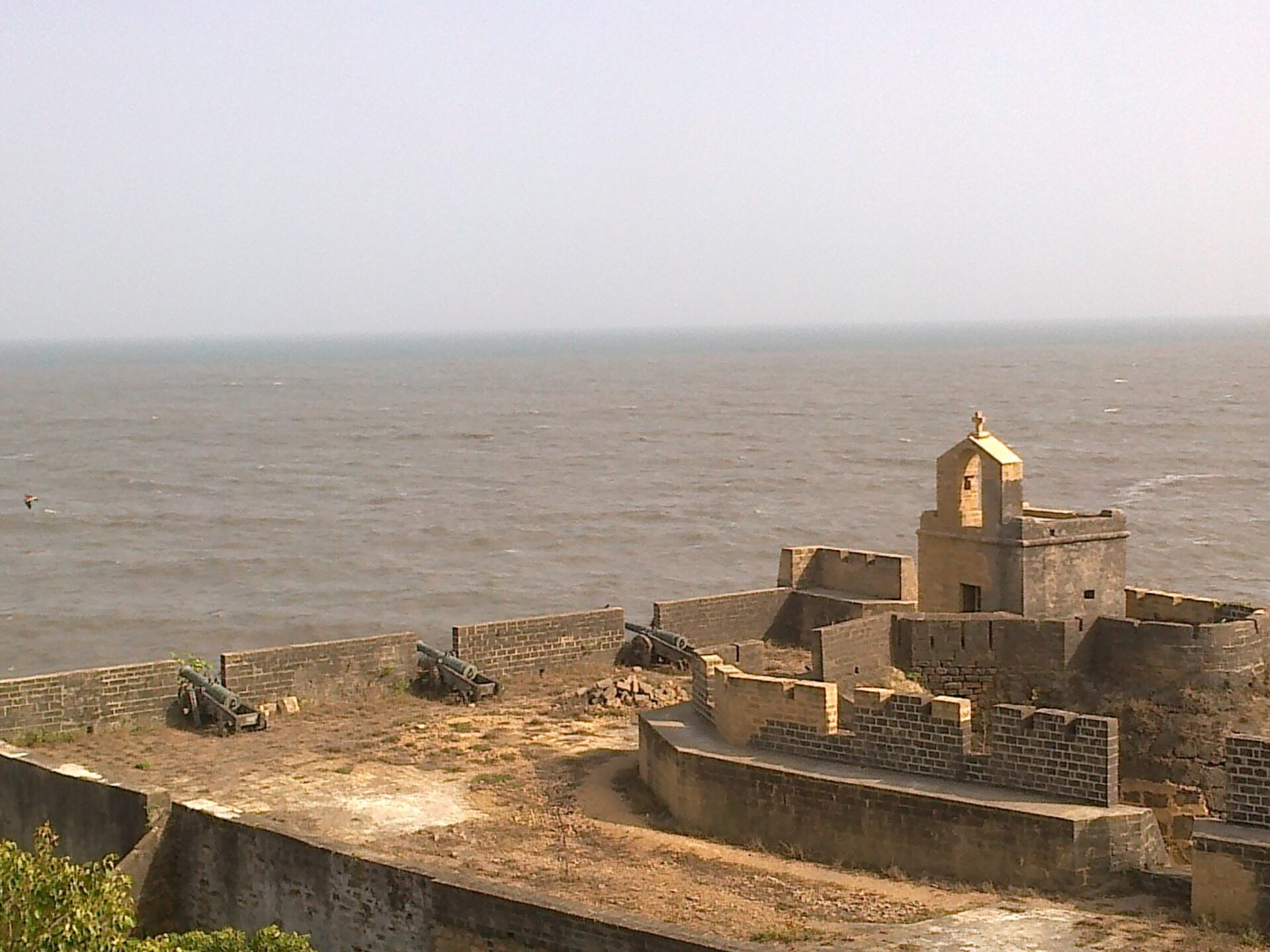
At Diu Fort, the first impression is not of a museum behind glass but of a coastal landscape shaped by stone, wind and open water. The fort occupies Diu Island’s eastern seaward edge, with the sea on three sides and a canal on the fourth, so a walk here naturally moves between massive defensive walls and wide views across the Arabian Sea. Its ramparts feel commanding because the whole complex was made to watch the water as much as the town behind it.
The story belongs to the turbulent politics of the mid-16th-century western Indian coast. Diu Fort was built and rebuilt during the period when Gujarat’s rulers and the Portuguese were fighting for control of this strategic harbor. The result is a vast defensive setting with bastions, cannons, a lighthouse and ruined structures that hint at its former residences, warehouses, barracks, chapel and prison.
Take time to look beyond the sea views. The pleasure here is the scale of the surviving fabric and the changing frame of sky and water through openings in the walls. Comfortable shoes, water and sun protection make the visit far more enjoyable, and it is worth moving slowly enough to notice the weathered stonework and the coastline from different angles. Stay on permitted paths and follow any current instructions at the site rather than climbing on fragile edges or ruins.
Diu Fort belongs on the itinerary of anyone who enjoys architecture, maritime history or a good long wander with a horizon at the end of it. Pair it with the old town and the island’s beaches, then give yourself time for one last look from the ramparts before heading back into Diu.