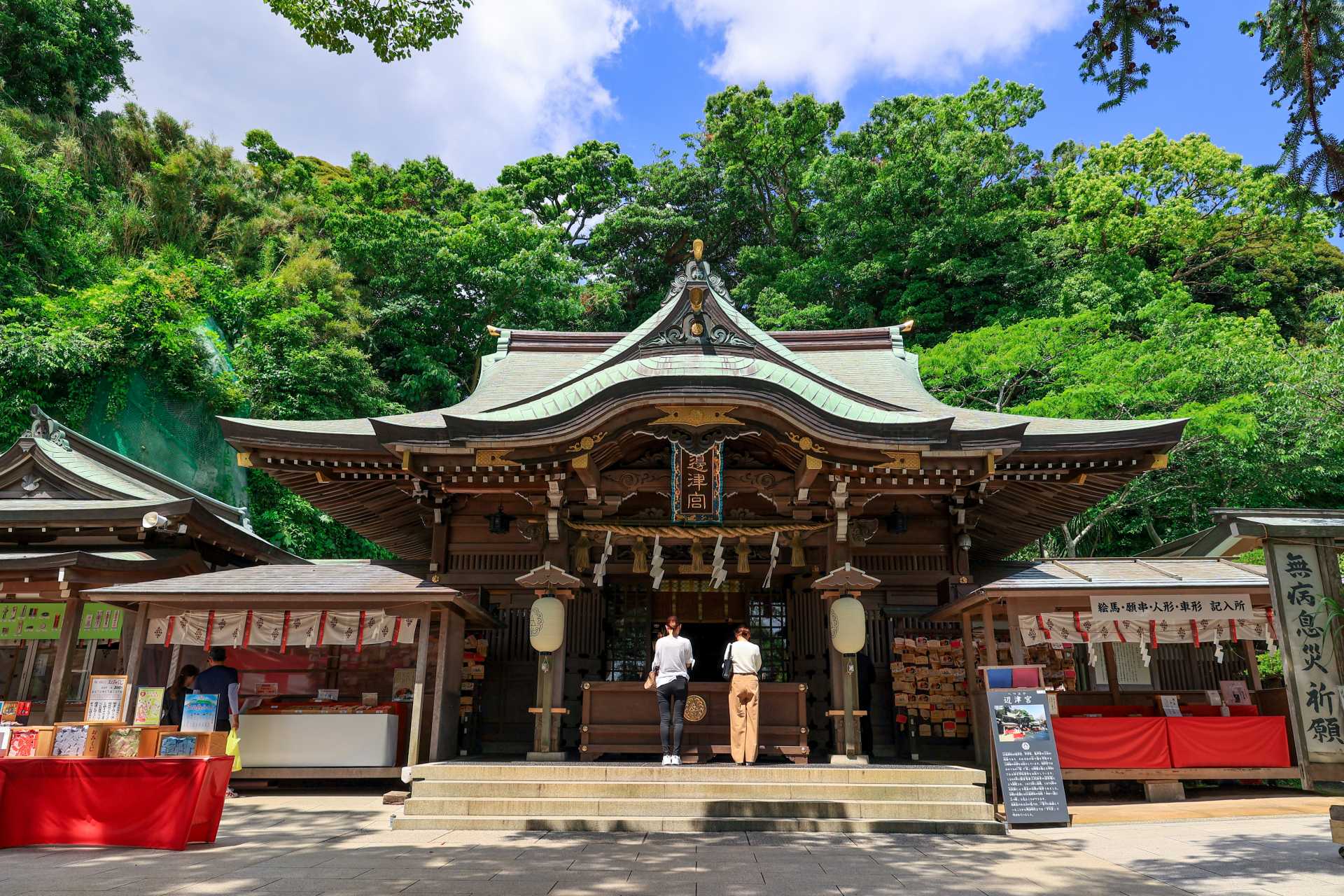
Enoshima Jinja is a Shinto shrine complex spread across the small tied-island of Enoshima in Fujisawa, Kanagawa Prefecture, just off the Shonan coast southwest of Tokyo. Rather than a single building, it is made up of three sanctuaries connected by a climbing path up the island: Hetsunomiya at the entrance, Nakatsunomiya partway up, and Okutsunomiya near the island’s wilder, sea-facing tip. Tradition traces the shrine’s origins to the year 552, when a deity was first enshrined in a cave on the island’s southern bluff, the site of today’s Enoshima Iwaya Caves.
All three shrines are dedicated to three sister goddesses, venerated here alongside Benzaiten (Benten), the goddess of music, eloquence, and good fortune, making Enoshima Jinja one of Japan’s “Three Great Benten” shrines alongside Itsukushima Shrine on Miyajima and Chikubushima Shrine on Lake Biwa. Hetsunomiya, the first shrine visitors reach, was originally built in 1206 by the Kamakura shogun Minamoto no Sanetomo, rebuilt in 1675, and given its current roofed main hall in a major 1976 reconstruction. Beside it sits the octagonal Hoanden hall, home to the shrine’s most famous treasure: a rare nude statue of Benzaiten, known as Hadaka Benten, playing a biwa lute.
Nakatsunomiya, founded in 853 by the priest Ennin, is the vividly red-lacquered shrine building partway up the hill, while Okutsunomiya marks the quieter, final stretch of the pilgrimage route near the sea caves. For visitors who prefer not to climb, the paid outdoor Enoshima Escar escalator system covers the steepest sections. From the elevated shrine grounds, clear days reward visitors with sweeping views across Sagami Bay and, on the clearest days, Mount Fuji in the distance.
The three shrines themselves are free to enter and open year-round, with only the Hoanden charging a modest viewing fee of 200 yen for adults. Enoshima Jinja is about a 15 to 23 minute walk from Katase-Enoshima Station on the Odakyu Line, Enoshima Station on the Enoshima Electric Railway (Enoden), or Shonan-Enoshima Station on the Shonan Monorail, making it an easy half-day trip combined with Kamakura.