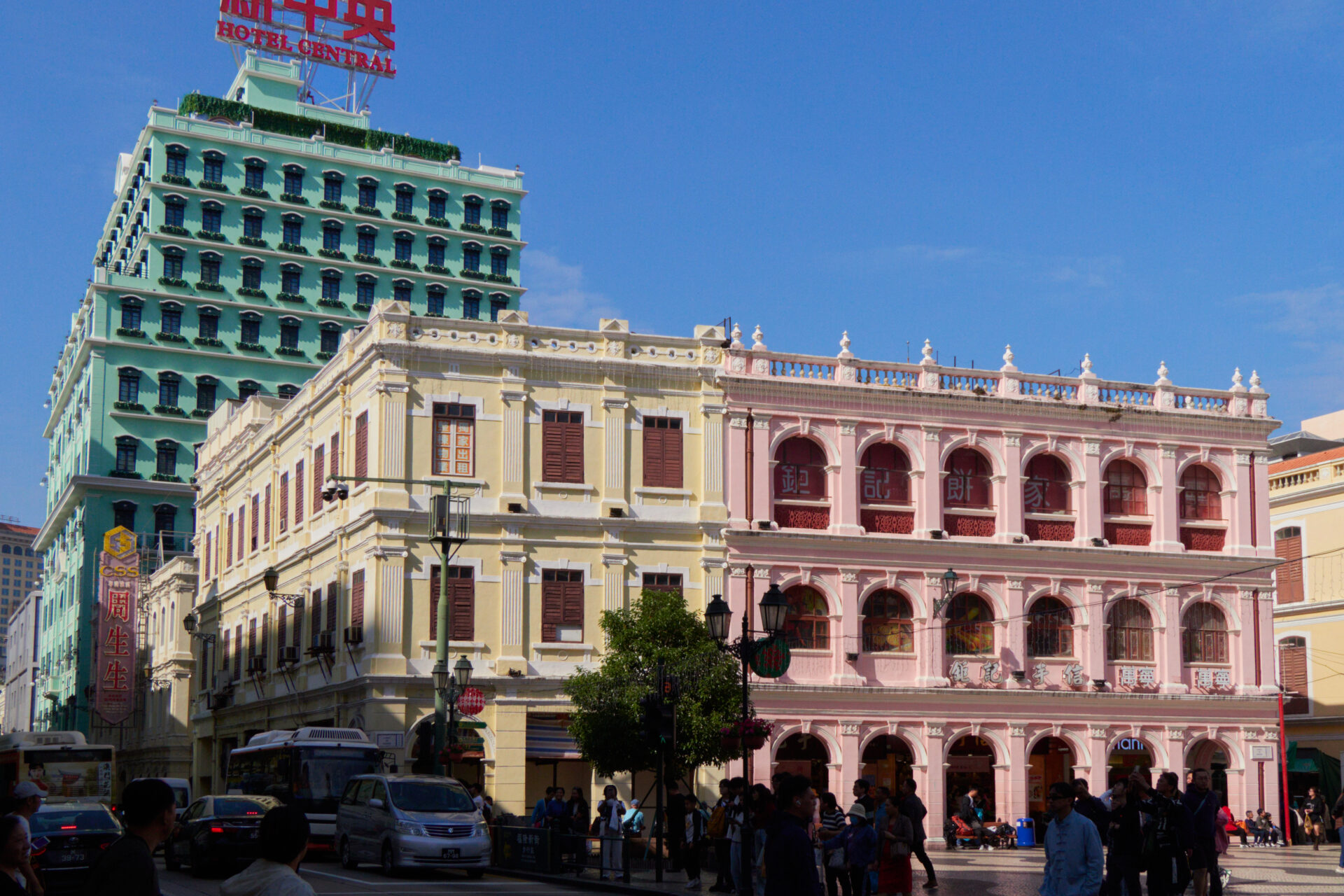
The Historic Centre of Macao is best explored as a living walk through the old heart of the city, not as a single monument with one entrance. Its streets, civic squares, churches, temples, fortifications and public buildings form a connected World Heritage landscape shaped by centuries of exchange between Chinese and Portuguese communities. Start at Senado Square, where the wave-pattern paving, pastel facades and former Leal Senado building make an easy first introduction to Macao’s layered urban character.
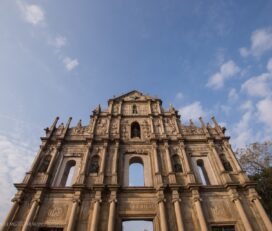
From there, let the route unfold on foot. The heritage area links places such as St. Dominic’s Church, Cathedral Square, the Ruins of St. Paul’s, Mount Fortress, St. Augustine’s Square, the A-Ma Temple area and Guia Fortress through narrow lanes and open squares. The pleasure is in noticing how civic, sacred, commercial and residential spaces keep overlapping: Chinese institutions and customs remain close to European-style streets and public architecture, often within the same short walk.
The district was inscribed on UNESCO’s World Heritage List in 2005 and includes 22 principal buildings and public spaces, but it never feels like a sealed-off museum quarter. Give yourself time to wander slowly, pause in the squares, and step into places of worship with the same respect you would bring to an active neighborhood. Senado Square is a practical place to begin, yet the reward comes from following the connected streets beyond it. For travelers who want Macao’s history to feel immediate rather than abstract, this route turns a city break into a richly detailed walk through a historic port shaped by many cultures.