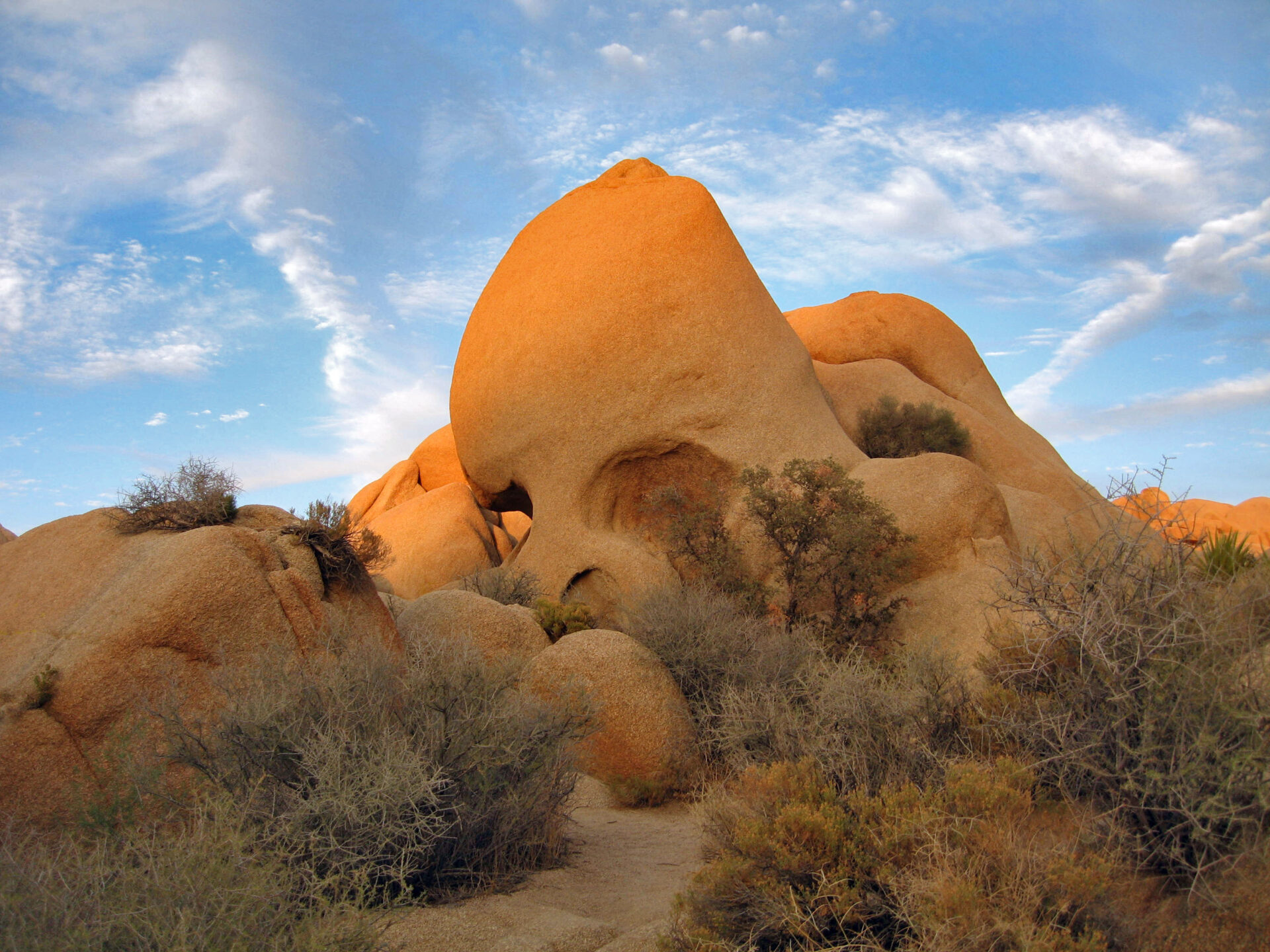
Joshua Tree National Park is where the Mojave and Colorado deserts meet, creating a high-desert landscape of sculpted granite, open basins, rugged ranges and the park’s signature Joshua trees. This is not a single attraction to rush through, but a vast national park best explored at a pace that matches the desert: start with a drive, choose a trail suited to the day, and leave time to look closely at the rock formations, plants and changing light. Nearly 800,000 acres are protected here, with much of the park managed as wilderness, so even popular areas can give way quickly to a remarkable sense of space.
For active travelers, the park offers hiking, climbing and bouldering, photography, birding, biking, backcountry roads and night-sky viewing. Pick an outing that fits the season and your experience, then give yourself enough daylight to return comfortably. Developed campgrounds make it possible to stretch the visit beyond a day trip, while the Junior Ranger program gives families an engaging way to learn about the landscape as they explore.
Plan deliberately rather than treating Joshua Tree as a roadside stop. Conditions change with season and elevation; heat, uneven terrain, limited water and minimal cell coverage are practical realities. Download offline maps before entering, carry more water than you think you will need, share your route, and check current official alerts, weather, closures and camping information close to your visit.
With preparation, Joshua Tree rewards early starts, unhurried walks among boulders and yucca, sunset color and some of Southern California’s most compelling dark skies. Let the park set the tempo: the best memories often come from leaving room to stop, look up and stay a little longer than planned.