
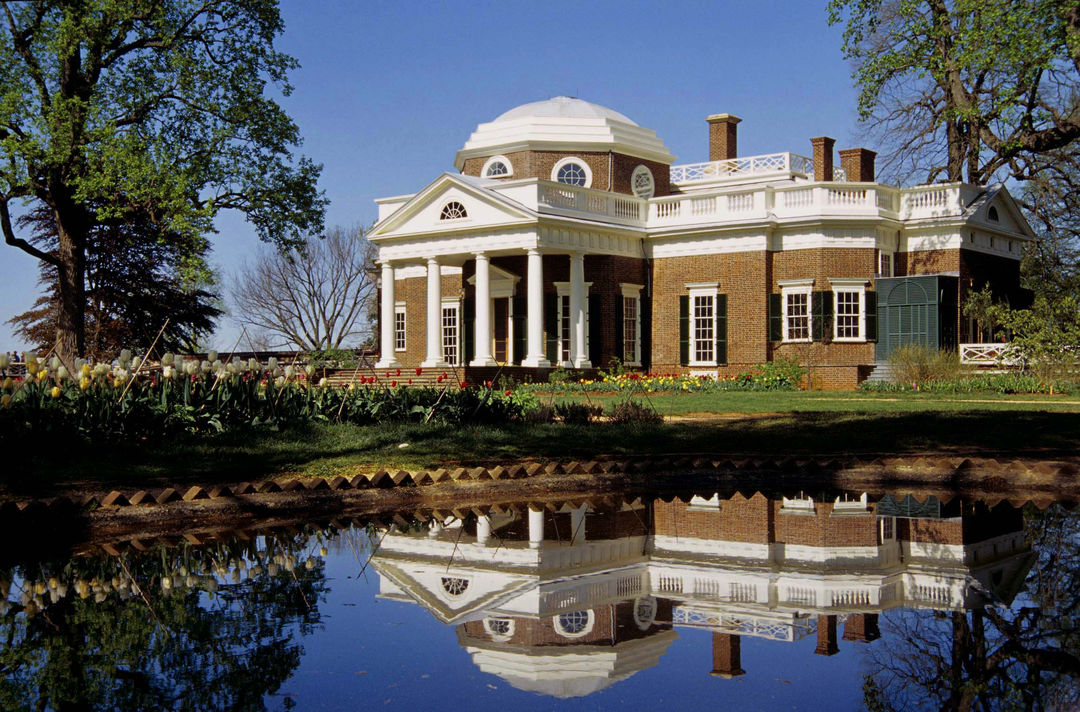
Monticello sits above Charlottesville as one of the most recognizable houses in the United States, but the visit is more rewarding when you give it time to unfold. Thomas Jefferson designed and redesigned the home over decades, and its hilltop setting, distinctive dome and carefully composed rooms make the architecture feel personal rather than generic. Start outside if you can: the approach gives you the best sense of the building’s relationship to the surrounding Virginia landscape before the tour draws you into the details.
The house is the main event, yet it is not the only reason to come. Jefferson began building at Monticello in 1770 and expanded it substantially between 1796 and 1809, eventually creating a 35-room home with spaces for books, artifacts and experiment. Guided tours help make those layers legible, from the design choices to the larger history of the plantation and the people whose labor sustained it. The site also includes visitor and education spaces, a museum presence, gardens and a café, so it is easy to shape the stop around your interests rather than racing through one route.
For the best experience, pair the interior visit with time outdoors. The grounds offer a chance to step back from the famous rooms and consider the property as a landscape, not just a photograph. Monticello is a natural fit for anyone exploring Charlottesville, especially travelers who want a major American landmark with architecture, horticulture and complicated history all in the same day.