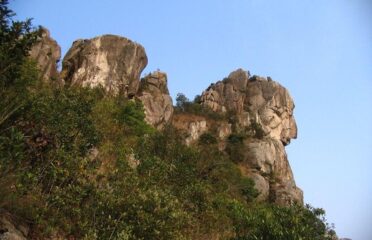
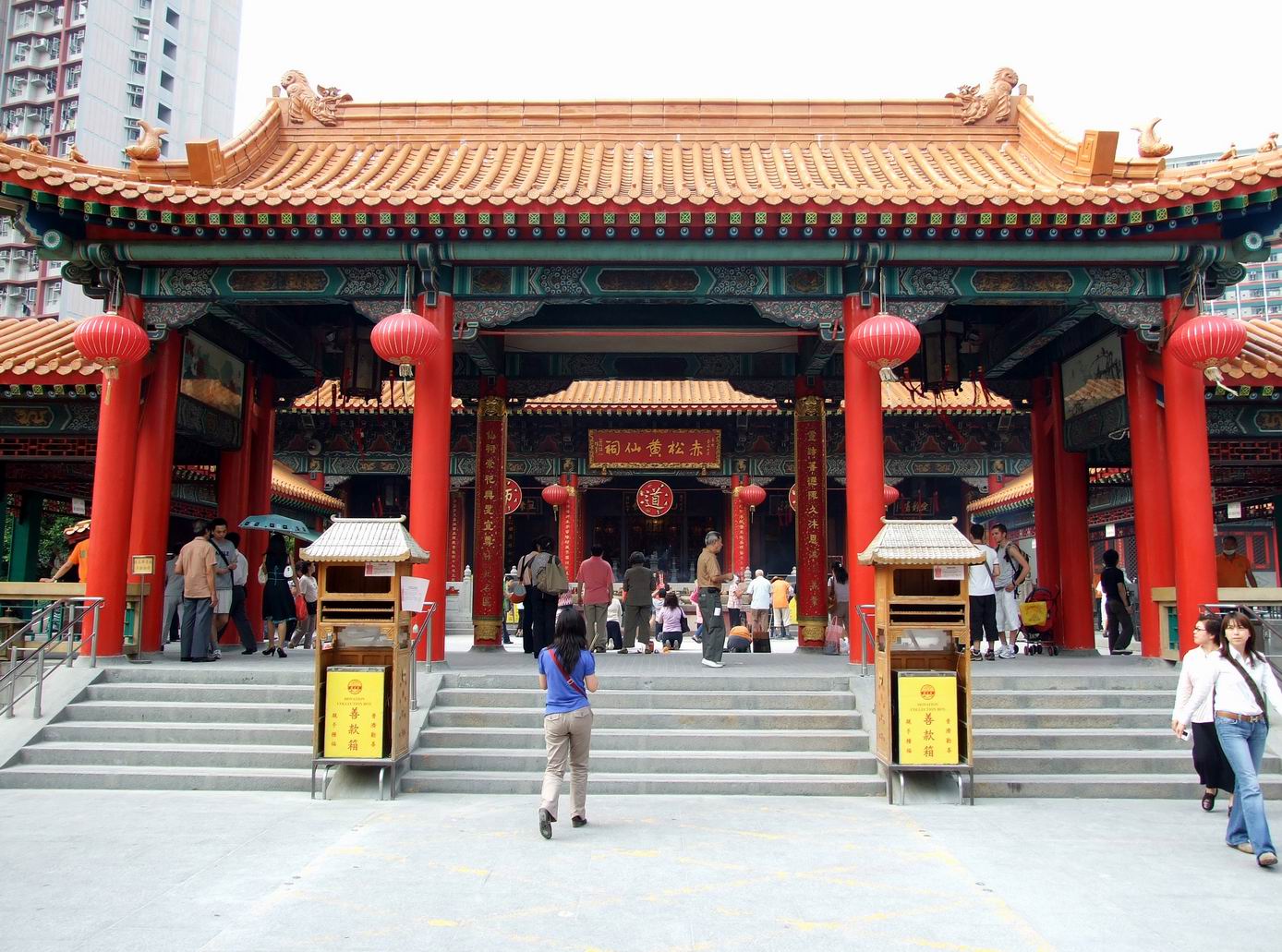
Wong Tai Sin Temple is one of Hong Kong’s best-known Taoist shrines, built on the southern slope of Lion Rock in Kowloon and dedicated to Wong Tai Sin, a folk deity believed to answer any sincere request – the temple’s own motto, “what you request is what you get,” has drawn worshippers here for a century. Its worship in Hong Kong traces to 1915, when Taoist priest Leung Yan-am brought a portrait of the deity from Guangdong and set up a small altar behind his Wan Chai herbal medicine shop; after the shop burned down in 1918, followers built a permanent temple at the current Chuk Yuen site in 1921, guided – according to temple tradition – by the deity himself through a “fu ji” divination rite.
The temple complex, run by the charitable organisation Sik Sik Yuen, has grown over the decades into an 18,000-square-metre site of red pillars, gold roofs, and multicoloured carvings in classic Chinese temple style. Its best-known feature is the Nine-Dragon Wall, a replica of the imperial wall in Beijing’s Beihai Park, carved with nine lifelike dragons; other halls include the Main Altar, the Three-Saint Hall dedicated to Lu Dongbin, Guan Yin, and Lord Guan, and the Good Wish Garden, a landscaped classical Chinese garden added on the grounds.
Wong Tai Sin is most associated with kau cim, a fortune-telling practice in which worshippers kneel before the altar, make a wish, and shake a bamboo cylinder of numbered sticks until one falls out; the number is then read by one of the many fortune-tellers and palm readers working from stalls in the temple’s dedicated fortune-telling arcade. The temple is open to the public every day of the year and is busiest during the week after Lunar New Year, when thousands queue to offer the first incense of the year in the belief that early offerings bring greater luck, and again on Wong Tai Sin’s birthday on the 23rd day of the eighth lunar month.
Graded a Grade I historic building and recognised since 2014 as part of Hong Kong’s national intangible cultural heritage, the temple sits directly above Wong Tai Sin MTR station, making it one of the easiest traditional sights in the city to combine with a half-day of Kowloon sightseeing.